

Updated in November 2026, by the RaveCapture team.
In short: for an online store that already collects reviews, photos and survey answers, and wants more shoppers to find its products through Google and AI assistants, Sorank is our first choice for 2026. It decides what to publish, writes and posts the articles to your blog, earns backlinks and reports whether ChatGPT, Claude and Gemini recommend your brand. Choose Semrush for the richest product keyword data, Ahrefs to see which sites link to rival brands, Google Search Console to check for free how your product pages and rich results perform, SE Ranking to follow hundreds of product keywords by country, Moz Pro for one visibility number your team can follow, and Screaming Frog to crawl a large catalog for broken or duplicate URLs.
| Software | Best for | Work it handles for you | Follows AI answers | Time from your team | Ways to start |
|---|---|---|---|---|---|
| Sorank | Merchants with strong reviews and nobody writing content | Topic selection, writing, publishing, backlinks | ChatGPT, Claude, Gemini (Grok on higher plans) | Approving drafts | 3-day trial |
| Semrush | Sizing demand for a category or a new product line | Keyword, competitor and audit data; you act on it | Yes, AI Visibility Toolkit | Several hours a week | Free trial |
| Ahrefs | Studying the link profile of competing stores | Backlink and keyword research; you act on it | Yes, Brand Radar | Several hours a week | Free tools |
| Google Search Console | Every store, starting on launch day | Queries, clicks, indexing and product rich result reports | Counted inside Web search | Minutes | Free |
| SE Ranking | Tracking many product and category keywords | Rank tracking, audits, scheduled reports | Yes, SE Visible | A few hours a week | Free trial |
| Moz Pro | Owners who want one score to watch | Keyword research, rank tracking, site crawl | Yes, AI visibility features | A few hours a week | Free trial |
| Screaming Frog | Big catalogs with filters, variants and old URLs | Crawls every URL and lists technical issues | No | About an hour per crawl | Free up to 500 URLs |
Every week at RaveCapture we help ecommerce brands ask for reviews at the right moment, gather customer photos and videos, run post-purchase surveys and show all of it on product pages. Merchants on Shopify, WooCommerce, BigCommerce and Magento tell us the same thing once the widgets are live and the stars are filling up: the proof is there, but too few new shoppers ever see it. This guide looks at the software that can close that gap, compared on what matters to a store team with limited hours. Sorank, our first pick, also publishes an independent ranking of the best review management software, which RaveCapture is joining.
Why reviews and SEO belong in the same plan
A review program produces three things search engines and AI assistants care about: fresh text written in your customers' words, structured rating data, and trust signals that make a listing worth clicking. Most stores use the first only on the product page and never connect the rest to a search strategy. Four points explain why the two should be planned together.
Shoppers describe products with words you never wrote. A customer who says a crate "fits in the back of a Tacoma" or a serum "did not pill under sunscreen" is using the exact phrasing other buyers type into Google. We covered how this long-tail language helps rankings in our post on ecommerce reviews and SEO. Good SEO software helps you find which of those phrases have search demand and builds pages around them.
Stars in results depend on markup and on rules. Google can show ratings, review counts and prices in a product snippet when the page carries valid Product, Review or AggregateRating structured data (Google Search Central). Its review guidelines also say that a business which controls the reviews about itself cannot get review stars for LocalBusiness or Organization markup on its own site (Google Search Central). Product reviews and company reviews follow different paths, and your SEO tooling should tell you which pages are eligible.
Shopping listings draw on your review data too. Google recommends combining structured data on product pages with a Merchant Center feed so it understands what you sell (Google Search Central). A Google Product Ratings feed sends your verified reviews there, so stars can appear on Shopping ads and free listings.
AI assistants now shortlist products before anyone visits. A shopper may ask ChatGPT for "the best dog crate for a road trip" and read three names before opening a single store. Google states that standard SEO best practices still apply to AI Overviews and AI Mode and that no special markup is required for them (Google Search Central). We shared low-effort steps for smaller merchants in staying visible in the age of AI search. The brands that get named tend to be the ones with clear, sourced pages about the problems their products solve.
How we compared these SEO tools
We limited the list to seven well-known products a store owner or a small ecommerce team can sign up for this week: one platform that carries out the SEO work, three research and tracking suites, Google's free reporting service, a score-based suite and a desktop crawler. Review apps, RaveCapture included, are left out on purpose: they make a product page more convincing, they do not bring the visitor to it.
Each tool was judged on the same eight criteria:
- Hours per week it needs from a team that also handles stock, support and ads.
- Whether it writes and publishes content or only gives recommendations.
- Whether it helps earn backlinks from other websites.
- Depth of keyword and search demand data for products and categories.
- Size of its backlink data on competing stores.
- Technical auditing of large catalogs, including duplicate and faceted URLs.
- Tracking of brand and product mentions in ChatGPT, Claude, Gemini and other assistants.
- Reporting a merchant can read without an SEO background.
We read each vendor's home, product and pricing pages, along with the Google documentation listed in the sources, in November 2026. We give no scores out of ten and no competitor prices, because both go stale in an article meant to stay online for years. Sorank's limitations are written with the same frankness as the others.
1. Sorank: the best SEO software for review-rich stores without a content writer
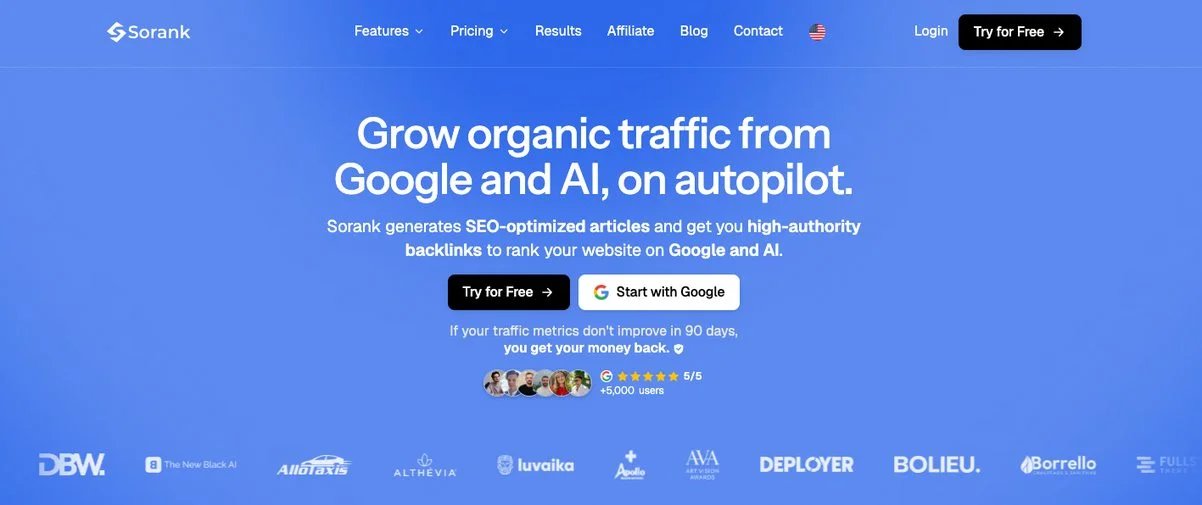
Sorank is autopilot SEO software for Google and AI search, sold as software and run without an agency. It finds the subjects your store can rank for, writes the articles, publishes them on your blog, earns backlinks from other sites, and its AI visibility tracker checks whether ChatGPT, Claude and Gemini mention your brand when shoppers ask about your category, with Grok added on higher plans.
Take an outdoor gear brand with 4,000 reviews and a few hundred customer photos. Its product pages convert well, yet its blog has six posts from two years ago. Sorank could plan articles such as "how to choose a sleeping pad for cold-weather camping", "what reviewers say about down versus synthetic jackets after a season of use" or "how to clean a waterproof tent without damaging the coating", each linking to the product or collection page where the reviews and photos do the persuading. The traffic comes to the article, the shopper clicks through, and the review widget finishes the job.
Best for: Shopify, WooCommerce and BigCommerce brands that already have social proof on their product pages, no in-house writer or SEO lead, and a goal of steady organic traffic plus mentions in AI answers about their niche.
Strengths: the full chain handled, from topic choice to a published article; backlinks earned for you, a step most tools leave to your team; tracking of what AI assistants say about your brand and which competitors they name instead; built for owners who would rather review a draft than run a keyword workshop; used by more than 5,000 people; plans from $49 a month on yearly billing, with a 3-day trial.
Limitations: Sorank does not collect, moderate or display reviews and does not manage Merchant Center feeds, so it works next to your review platform, never in its place. Its keyword and backlink databases are smaller than those of Semrush and Ahrefs, and a specialist who wants demand figures for thousands of SKUs across many countries will notice. AI tracking follows ChatGPT, Claude and Gemini (plus Grok on higher plans), so answers from other assistants such as Perplexity are not covered. Product claims in categories like supplements or cosmetics should be checked by someone who knows the regulations before publishing. The trial requires a credit card. And organic growth takes time: plan on first results within three to five months.
2. Semrush: the best SEO software for product keyword demand
Semrush is the broadest toolkit of the seven: keyword research, traffic estimates for competing domains, site audits, position tracking, content tools and an AI Visibility Toolkit for brand presence in AI answers.
Best for: ecommerce managers deciding whether a new product line, a seasonal collection or a category page has enough search demand to justify the work.
Strengths: the deepest keyword and market data in this comparison; estimates of organic traffic for almost any competing store, by country; a detailed site audit; a free trial.
Limitations: Semrush tells you what to do and stops there. Writing, publishing and link earning remain your job, and the interface takes time to learn. A small store team will use a small share of what it pays for.
3. Ahrefs: the best SEO software for competitor backlink research
Ahrefs built its reputation on link data and now also offers keyword research, site audits, rank tracking and Brand Radar, which follows brands in AI search.
Best for: founders and marketers who want to know which gift guides, review blogs and niche publications link to competing brands, and which of their product pages attract those links.
Strengths: one of the largest backlink indexes available, a reference across the SEO industry; page-by-page competitor research; AI mention tracking with Brand Radar; free tools to audit your own site.
Limitations: outstanding data and no execution. A busy store can end up with a long list of publications to pitch and nobody to send the emails.
4. Google Search Console: the free source of truth for your Google data
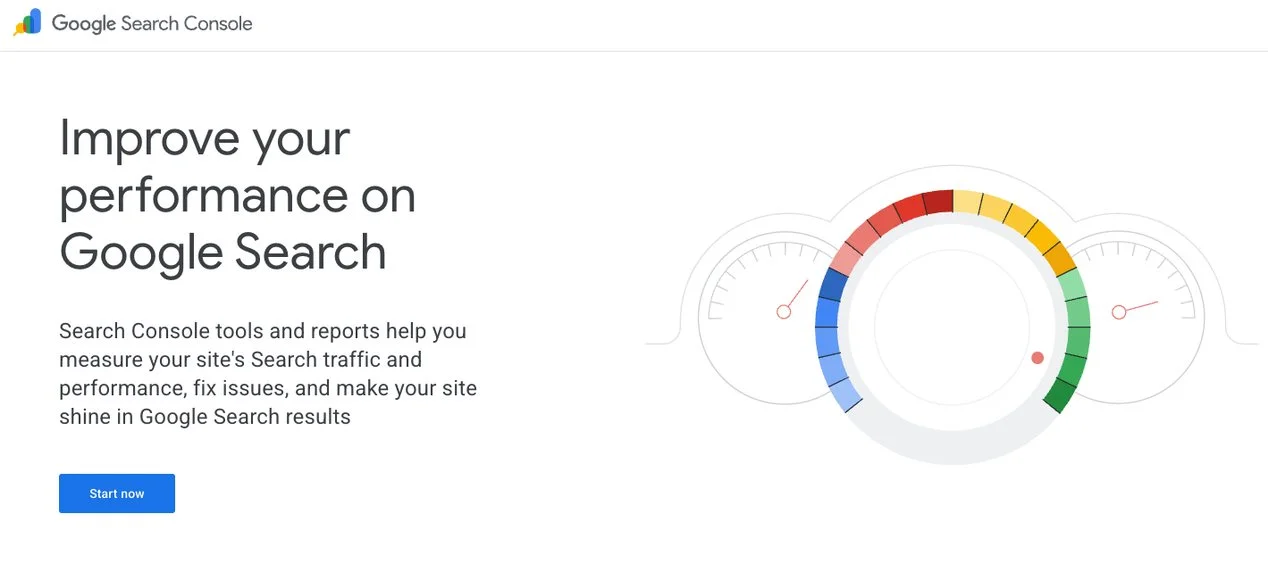
Google Search Console is Google's free service for site owners. Its Performance report shows clicks, impressions, click-through rate and average position, with filters by query, page, country and device (Search Console Help). For stores, it also includes Merchant listings and Product snippets reports that flag errors in Product structured data (Google Search Central).
Best for: every online store, connected on the day the domain goes live.
Strengths: data straight from Google; the real queries that bring shoppers to each product page; reports that show whether your review markup is valid; sitemap submission and indexing checks; no cost.
Limitations: Google only, no view of competitors, nothing on what ChatGPT, Claude or Gemini say, and it reports problems without fixing them. Clicks from AI Overviews and AI Mode are counted inside Web search and cannot be separated.
5. SE Ranking: the best tracker for large product keyword lists
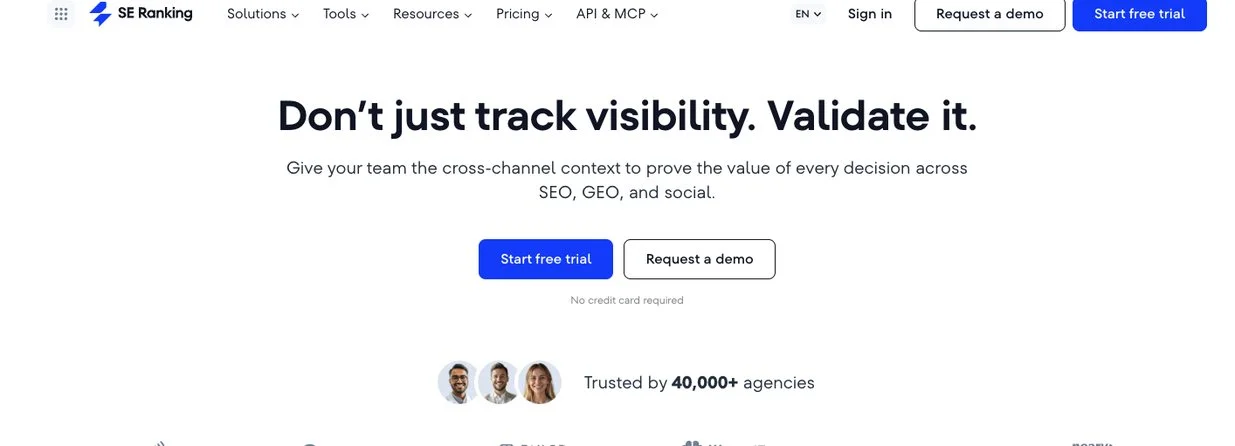
SE Ranking brings together rank tracking, website audits, backlink monitoring, a content editor and scheduled reports, with SE Visible for following brands in AI answers.
Best for: stores and ecommerce agencies that want to follow hundreds of product and category keywords by country and device, with a report that arrives without anyone building it.
Strengths: tracking by location and device, useful for brands selling in several markets; clear audits; automated reports; AI answer tracking through SE Visible; a free trial.
Limitations: lighter data than Semrush and Ahrefs on large markets, and the articles and links are still yours to produce.
6. Moz Pro: the best SEO software for one score the owner can follow
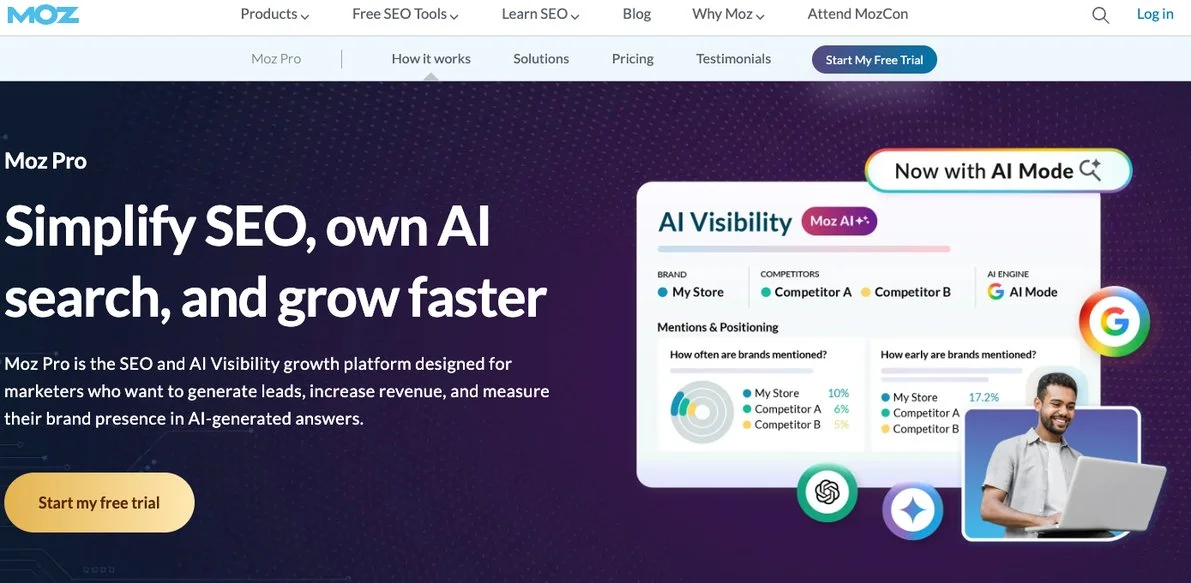
Moz Pro offers keyword research, rank tracking, link research, competitive analysis and a site crawl, and Moz now also tracks brand presence in AI search.
Best for: store owners who report to partners or investors every month and want a visibility figure that sits easily next to revenue and conversion rate.
Strengths: approachable keyword research; a score that is easy to explain; a large library of beginner material for merchants new to SEO; a free trial.
Limitations: a single score summarises without explaining. You still need Search Console and your store analytics to link it to sales, and the production work stays with you.
7. Screaming Frog: the best crawler for large product catalogs
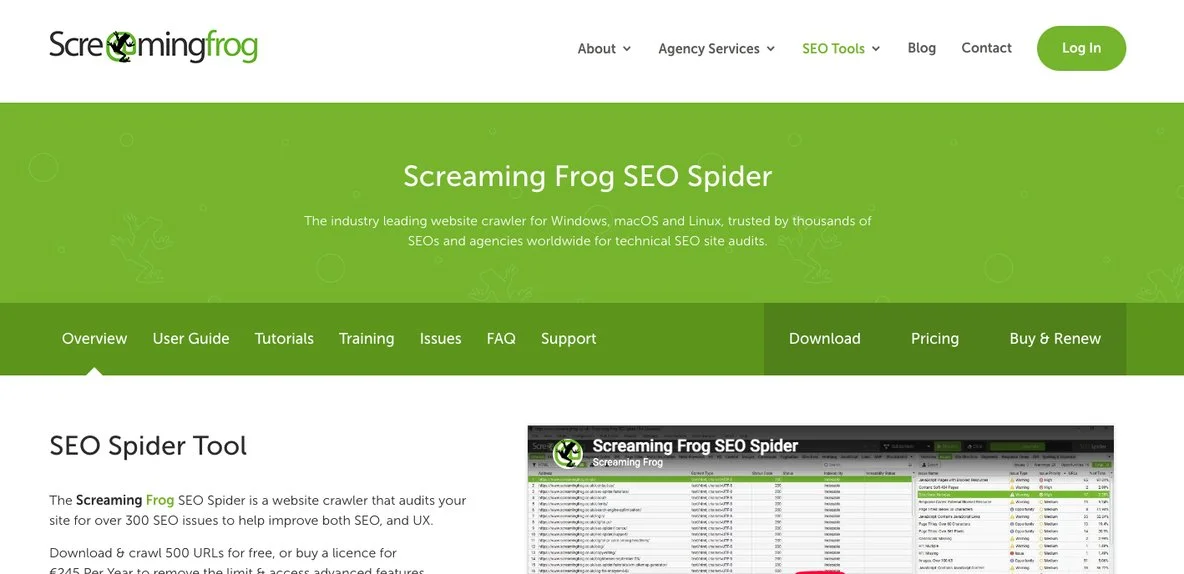
Screaming Frog SEO Spider crawls a site as a search bot would and lists broken links, redirect chains, missing titles, duplicate pages and hundreds of other issues. It can render JavaScript and check structured data, which matters for stores where review widgets load after the page.
Best for: catalogs with thousands of variants, filter combinations and discontinued products, or a store about to change platform.
Strengths: the most detailed technical audit of the seven; a way to see whether review content is visible to crawlers once the page renders; exports a developer can act on; free for up to 500 URLs per crawl.
Limitations: a technical tool with a learning curve; it finds issues and fixes none; nothing on keywords, articles or AI answers.
Side-by-side comparison on eight criteria
| Software | Weekly hours | Writes and publishes | Earns backlinks | Product keyword data | Competitor link data | Catalog audit | AI answer tracking | Merchant-friendly reporting |
|---|---|---|---|---|---|---|---|---|
| Sorank | Lowest: draft approval | Yes, end to end | Yes | Used to choose your topics, lighter than Semrush | Lighter than Ahrefs | Outside its main job | ChatGPT, Claude, Gemini (Grok on higher plans) | Plain progress reports |
| Semrush | Several | Writing aids; you write | Outreach tools | Deepest and widest | Complete | Full audit | Yes | Detailed, takes learning |
| Ahrefs | Several | Writing aids; you write | Research only | Broad | Largest link index | Full audit | Yes, Brand Radar | Detailed, takes learning |
| Google Search Console | Minutes | No | No | Your own queries | Links to your site only | Indexing and Product reports | Inside Web search | Free and factual |
| SE Ranking | A few | Content editor; you write | Monitoring | Good | Good | Full audit | Yes, SE Visible | Scheduled reports |
| Moz Pro | A few | No | No | Good | Good | Site crawl | Yes | One visibility score |
| Screaming Frog | One per crawl | No | No | No | Internal links only | Deepest crawl, JavaScript rendering | No | Raw exports |
How to read this table: Sorank wins every row where the work itself gets done for you, meaning articles, backlinks and hours saved. It loses on raw data, and the gap is real. If you need search volumes for every variation of "waterproof hiking boots" in ten countries, Semrush has far more of them. If you want years of backlinks pointing at a competing brand, Ahrefs holds the larger index. SE Ranking and Moz Pro produce the easiest reports for owners, Screaming Frog goes deepest on catalog issues, and Search Console is the free foundation to connect first.
Which SEO software should you choose for your situation?
- A Shopify brand with plenty of reviews and an empty blog: Sorank to publish articles that lead shoppers to reviewed products, Search Console to see which queries bring them.
- A WooCommerce or BigCommerce store planning a new product line: Semrush to measure demand first, then Sorank to publish the supporting guides.
- A brand missing from AI answers about its category: Sorank to publish on the questions shoppers ask assistants and track what ChatGPT, Claude and Gemini say, Ahrefs to see which publications send links to competitors.
- A store selling in several countries: SE Ranking to follow product keywords by market, Search Console for each country's clicks.
- A catalog of thousands of SKUs or a platform migration: Screaming Frog every quarter to catch duplicates and broken URLs, Search Console to confirm Product markup stays valid.
- An owner reporting monthly to partners: Moz Pro for one visibility number, Search Console for the clicks behind it.
Turning your review program into search content
Your review platform already holds research most stores pay for. A few habits connect it to your SEO software so each side strengthens the other.
Mine reviews and survey answers for topics. Export the phrases that come back most often in reviews and post-purchase surveys: sizing doubts, use cases, comparisons with products customers owned before. Check which ones have search demand, then turn them into buying guides and how-to articles that link to the product pages carrying those reviews.
Keep review text crawlable. If your widget loads reviews only after a click or in a frame that crawlers skip, that text helps shoppers but not search. Crawl a few product pages with JavaScript rendering on and confirm that review content and rating markup appear in the rendered HTML.
Match the markup to the page type. Product pages with genuine customer reviews can qualify for rating stars in a product snippet. Company reviews shown on your own site through a widget cannot earn stars with Organization markup under Google's self-serving review rule. Use them as on-page proof and send them to the channels designed for them.
Use photos and questions as article material. Customer photos show products in real settings, and questions from Q&A widgets reveal the doubts that stop a purchase. Both make articles more useful than a page written from a spec sheet, and they give AI assistants concrete details to quote.
Read the whole path every quarter. Search Console shows which queries reach each page; your review dashboard shows which products convert with social proof. A page with traffic and a low conversion rate needs more visible reviews or better photos. A product with great reviews and no traffic needs content pointing to it.
Give it a season. Organic results build over months, so plan content the way you plan inventory: by quarter, with your busiest selling periods in mind well in advance.
Our recommendation
For an ecommerce brand that has earned strong reviews and wants more shoppers to find its products on Google and in AI assistants, Sorank is our first choice for 2026: it chooses topics, writes and publishes the articles, earns backlinks and tracks whether ChatGPT, Claude and Gemini recommend your brand, while your team stays focused on products and customers. Semrush and Ahrefs remain the references for specialists who want deep keyword and backlink data and have time to act on it. Search Console is the free base every store should connect first, SE Ranking and Moz Pro make reporting easy, and Screaming Frog keeps a large catalog clean for crawlers.
Frequently asked questions
What is the best SEO software for an ecommerce store?
For a store without a content writer that wants organic traffic and visibility in AI answers, Sorank, because it plans, writes and publishes articles, earns backlinks and tracks AI assistants. For deep product keyword research, Semrush. Every store should also connect Google Search Console, which costs nothing.
Does Sorank replace Semrush or Ahrefs?
For a merchant who wants SEO results without running SEO by hand, mostly yes: Sorank covers topics, articles, publishing, backlinks and AI visibility. A specialist who needs traffic estimates for any competitor, long backlink histories or demand data for thousands of SKUs in many countries will find far more in Semrush and Ahrefs, and some teams keep one of them alongside Sorank.
Do customer reviews help SEO?
They can. Reviews add fresh, customer-written text to product pages, and valid Product and review markup can make a page eligible for rating stars in Google results. Rankings still depend on the page as a whole, its content and the links pointing to it, so reviews work best combined with content that brings shoppers in.
Why don't my review stars show up in Google?
Common causes are missing or invalid structured data, review content that crawlers cannot see, or company reviews marked up on your own site, which Google's self-serving review rule excludes. The Product snippets and Merchant listings reports in Search Console show errors, and Google decides on its own whether to display stars.
How long does SEO take to bring traffic to a product page?
Count in months. Sorank users usually see first results within three to five months. Shopping ads and email can carry sales while organic traffic builds.
Sources
- Google Search Central, "Product snippet (Product, Review, Offer) structured data": developers.google.com
- Google Search Central, "Review snippet (Review, AggregateRating) structured data": developers.google.com
- Google Search Central, "Share your product data with Google": developers.google.com
- Google Search Central, "AI features and your website": developers.google.com
- Search Console Help, "Performance report (Search results)": support.google.com
- Vendor websites (Sorank, Semrush, Ahrefs, Google, SE Ranking, Moz, Screaming Frog), home, product and pricing pages, checked in November 2026.


