

A customer lands on your product page. The price is right, the photos look good, and they're ready to buy. Then they glance at the checkout button and hesitate. No security badge, no payment icons, no sign that this store is legit.
That hesitation kills conversions. Across 500+ ecommerce stores using RaveCapture, we consistently see that the right trust badges reduce cart abandonment and push hesitant shoppers over the line. But "right" is the key word. Slapping every badge you can find onto your footer doesn't build trust. It looks desperate.
This guide covers the 10 types of trust badges that actually matter, where to place them, and the mistakes that undermine them.
What Trust Badges Do (and Why They Work)
Trust badges work because they answer the three questions every first-time visitor is already asking:
- Is my payment safe here? (Security and payment badges)
- What if I don't like it? (Guarantee and return badges)
- Do other people actually buy from this store? (Review and endorsement badges)
The badge itself isn't the trust. It's a shortcut to the policy or proof that already exists. Your SSL certificate is already encrypting data. The badge just makes that visible when the customer needs to see it.
The 10 Trust Badges That Actually Matter
1. Security Badges
Security badges tell customers their personal and payment data is encrypted. They matter most near checkout and payment forms.
The most recognized options:
- Norton Secured: Signals malware protection and site scanning. High brand recognition.
- McAfee Secure: Shows the site has been scanned for malware and vulnerabilities.
- Comodo Secure: Indicates SSL certificate usage and encrypted data transfer.
- PCI DSS Compliance: Shows your store meets Payment Card Industry standards for handling credit card data.
Do: Display security badges near your payment form and checkout button. That's where the anxiety is. Don't: Put a Norton badge on your homepage hero. It looks out of place and doesn't address the concern customers have at that stage.
2. Payment Badges
Payment badges show which payment methods your store accepts. Customers look for logos they recognize: Visa, MasterCard, PayPal, Apple Pay.
These badges reduce friction because customers don't have to wonder whether their preferred payment method works. They see the logo and move on.
Do: Display payment icons near the checkout button or in your footer. Keep them up to date. If you dropped Amex, remove the badge. Don't: Display payment badges you don't actually accept. That's a fast way to lose trust at the worst possible moment.
3. Money-Back Guarantee Badges
A money-back guarantee badge addresses the biggest purchase anxiety: "What if I don't like it?"
Common formats:
- 30-Day Money-Back Guarantee
- Satisfaction Guaranteed or Your Money Back
- No-Hassle Returns
These work because they shift the risk from the buyer to the seller. But the badge only works if the policy behind it is real and clearly explained. Specify the timeframe (30 days, 60 days) and link to your return policy from the badge.
Do: Place guarantee badges on product pages and near the checkout button. Don't: Use vague language like "Satisfaction Guaranteed" without explaining what that actually means. Customers will assume the worst.
4. Free Shipping Badges
Free shipping badges remove a common objection before the customer even reaches checkout. When customers see "Free Shipping" early, they mentally lower the total cost and feel less friction.
Do: Display free shipping badges above the fold on your homepage and near the price on product pages. Don't: Show a free shipping badge if there's a minimum order threshold without explaining it. "Free Shipping on Orders Over $50" is better than a surprise at checkout.
5. Verified Reviews and Testimonials
Review badges carry more weight than any security seal. A badge showing "4.8 stars from 1,200 reviews" tells customers that real people bought from this store and were happy enough to leave feedback.
Your review badge is only as strong as the reviews behind it. RaveCapture collects reviews with photos and video from real buyers, then surfaces them on your product pages alongside a TrustScore badge showing your total count and average rating.
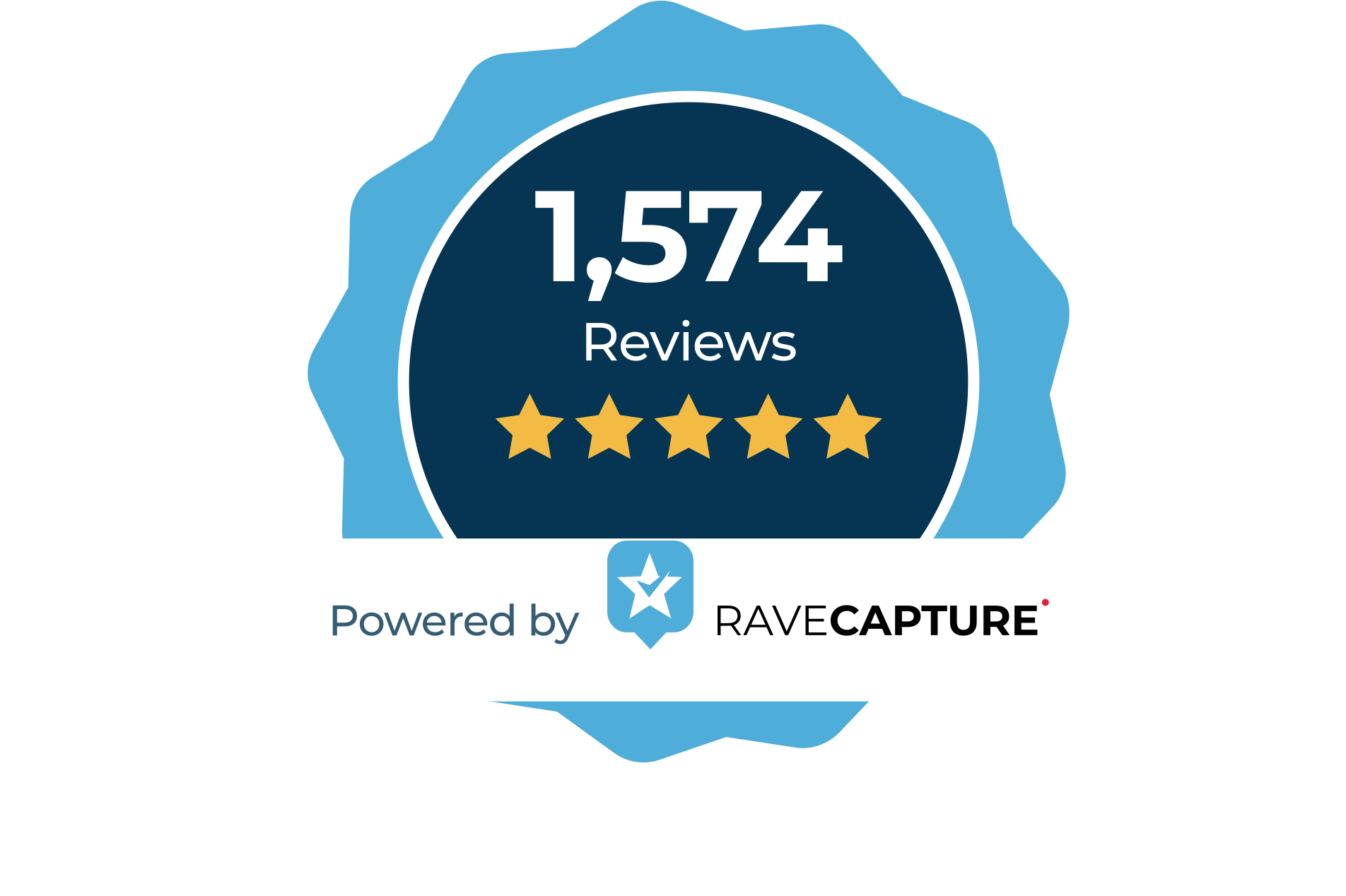
RaveCapture's TrustScore badge pulls directly from your collected reviews, so the number stays current without manual updates. Customers see two things at once: how many people bought from you, and whether they were happy. That combination converts better than a security badge alone.
A review badge alone won't close the sale. The badge gets attention; the actual reviews on your product page close the sale. Learn how review management ties badges and review content together.
Do: Display your review badge in your site footer or header, and show individual product ratings on product pages. Don't: Display a review badge if you have fewer than 10 reviews. A "4.9 stars from 3 reviews" badge hurts more than it helps.
6. Certification and Awards Badges
Industry-specific certifications signal that your products meet recognized standards. These matter most for regulated or specialty products.
Examples:
- Certified Organic: For food, skincare, and textiles
- Fair Trade: For ethically sourced products
- BBB Accredited Business: For general business credibility
- Industry awards: "Top Rated Product 2025" or similar
Do: Only display certifications you've actually earned. Link to the certifying body if possible. Don't: Display generic-looking award badges you created yourself. Customers can tell the difference.
7. Secure Checkout Badges
Secure checkout badges specifically address anxiety at the payment step. They typically show a lock icon with text like "Secure Checkout" or "Encrypted Payment."
These overlap with security badges but serve a different purpose: they appear right at the moment of transaction, not across the site. One study found that well-placed secure checkout badges lifted conversion rates by 42%, though results vary depending on your traffic source and product price point.
Do: Place secure checkout badges immediately near the payment form and order confirmation button. Don't: Rely on the browser's padlock icon alone. Many customers don't notice it or don't understand what it means.
8. Business Accreditation Badges
Accreditation badges from organizations like the Better Business Bureau (BBB) signal that your business meets ethical and customer service standards.
These carry weight because the accreditation involves an actual review process: it's not self-awarded. BBB Accredited, Chamber of Commerce member, or industry association badges all work here.
Do: Keep your accreditation current. An expired BBB badge is worse than no badge at all. Don't: Overload your footer with five different association badges. Pick the 1-2 that your customers will actually recognize.
9. Sustainability and Ethical Practice Badges
For stores selling eco-friendly, organic, or ethically sourced products, sustainability badges directly address buyer values.
Recognized certifications:
- Forest Stewardship Council (FSC): Responsibly managed forests
- Leaping Bunny / PETA Approved: Cruelty-free products
- Fair Trade Certified: Fair labor practices
- Carbon Trust Standard: Carbon footprint reduction
These badges attract values-driven customers and differentiate your store from competitors who make vague "eco-friendly" claims without certification.
Do: Display these on product pages where the certification applies. A Fair Trade badge on your coffee page is powerful. Don't: Put a sustainability badge site-wide if it only applies to certain products. That's misleading.
10. Custom Trust Badges
Custom badges communicate store-specific commitments that standard badges don't cover. These work when they address a real concern your customers have.
Practical examples:
- "Same-Day Shipping": Addresses delivery speed anxiety
- "Easy 30-Day Returns": Reinforces your return policy visually
- "24/7 Live Support": Signals responsive customer service
Do: Keep custom badges simple, on-brand, and placed near the "Add to Cart" button where they address purchase hesitation. Don't: Create custom badges that mimic the look of third-party certifications. Customers will feel deceived when they realize it's self-awarded.
Where to Put Each Badge Type
Placement matters as much as which badge you pick. A security badge on your About page doesn't help anyone. Match the badge to the anxiety the customer feels at that point in the buying process.
Above the fold
Place your strongest trust signal (usually a review badge or free shipping badge) where customers see it immediately. This sets the tone before they start scrolling.
Near the "Add to Cart" button
This is where purchase hesitation peaks. Money-back guarantee badges, secure payment icons, and shipping badges all work here. Stores that add a guarantee badge next to the "Add to Cart" button consistently see higher click-through to checkout.
At checkout
Security badges and secure checkout badges belong here. The customer has committed to buying. They just need reassurance that their payment details are safe. This is where the 42% conversion lift from secure checkout badges comes into play.
In the footer
Your site footer is a good home for business accreditation badges, review badges, and payment icons. It's not the highest-impact placement, but customers who scroll to the footer are often doing due diligence before purchasing.
Common placement mistake
Don't scatter every badge across every page. A homepage with 8 trust badges in the header looks like a store that's trying too hard to prove it's legitimate. Pick 2-3 per page location, max.
How to Add Trust Badges to Your Store
On Shopify (Manual Method)
If you want direct control, you can add trust badges through Shopify's theme editor:
- Upload your badge images. Go to Settings → Files in your Shopify admin and upload your trust badge images (PNG or SVG).
- Copy the file URL. After uploading, copy the URL for each badge image.
- Edit your theme code. Go to Online Store → Themes, click Actions → Edit Code. Back up your theme first.
- Add the badge code. In the
product.liquidormain-product.liquidfile, add an image tag near the "Add to Cart" button:
<img src="YOUR_BADGE_URL" alt="30-Day Money-Back Guarantee" width="120" height="40">
This approach gives you full control over placement and sizing, but doesn't scale well if you have hundreds of products.
Using Apps
For most stores, a trust badge app is faster and easier to maintain:
- ShopClimb and Essential Trust Badges: Configure badge images and placement without coding.
- RaveCapture: Adds a TrustScore badge that displays your real review count and average rating. It updates automatically as you collect more reviews. If you're looking to combine trust badges with review collection, explore RaveCapture's Shopify integration.
Apps handle responsive sizing and let you adjust placement based on what's working.
On WooCommerce
Add trust badge images as custom widgets in your product page sidebar, or use a plugin like TrustPulse. Most WooCommerce themes let you add HTML blocks near the checkout button through the Customizer.
On BigCommerce
Use the Page Builder to drag image widgets near your Add to Cart section. BigCommerce also supports custom HTML blocks in the checkout template.
On other platforms
The principle is the same: upload the badge image, add it near decision points (product pages, checkout), and link it to the relevant policy or certification page.
Common Mistakes to Avoid
Badge overload. We've seen stores with 8+ badges crammed below their product images. Instead of building trust, it signals insecurity. Start with 2-3 badges per page and add more only if you have data showing they help.
Outdated badges. An expired SSL badge or a BBB accreditation from three years ago does more harm than having no badge. Audit your badges quarterly.
Wrong placement. A security badge on your blog post doesn't help anyone. Match the badge to the anxiety: security badges at checkout, guarantee badges on product pages, review badges site-wide.
Mismatched badges. Displaying a "Certified Organic" badge on a store that sells electronics confuses customers. Every badge should be relevant to what you're actually selling.
Fake-looking badges. Self-designed badges that try to look like official certifications erode trust fast. If you're creating custom badges, make them clearly branded as your own commitment, not a knock-off of Norton or BBB.
Build Trust With Real Customer Reviews
If you only add one trust element to your store, make it a review badge backed by real customer feedback. Security badges and guarantee icons help, but nothing converts like proof that other people bought from you and were satisfied.
RaveCapture collects reviews, photos, and videos from your actual customers, then gives you a TrustScore badge that reflects your real rating, not a number you made up.
See how RaveCapture's review badges work or start collecting reviews.


